


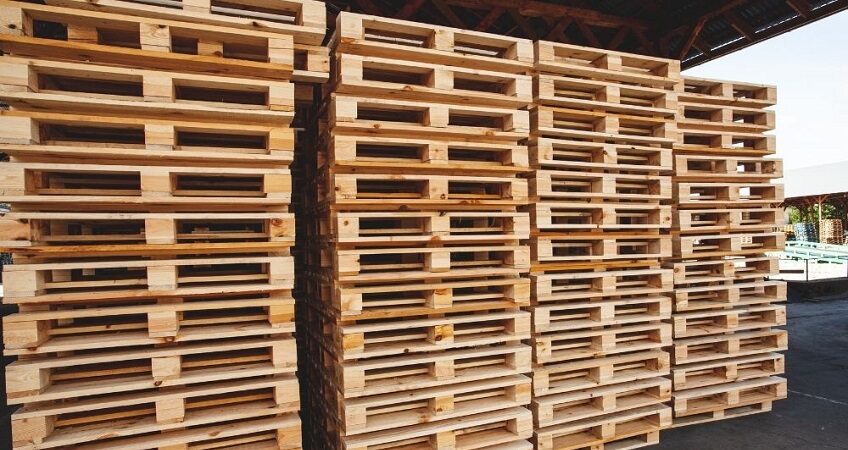
The history of wooden pallets goes back about 100 years. Pallets were invented primarily to reduce the time and number of workers needed to load and unload goods. Gradually, with the development of international trade and the evolution of loading equipment, there was a need to standardize wooden containers. The USA, the home of pallets, was the first to do so, followed by Europe and Russia.
The idea of harmonizing containers was a real breakthrough, but the standards were adopted in different ways by different countries. A lot of factors had to be taken into account, and approaches to the development of requirements often differed. Today there are different types of pallets – let’s find out what kind of pallets there are.
Types of wooden pallets
Wooden pallets found on the world market are often given commonplace names such as “American”, “Europallet“, “Finpallet”. However, this does not always communicate the country of manufacture of the container, but rather the specific standard to which it conforms.
Euro standard pallets (“euro pallet”, “euro pallet”) are described in UIC 435-2. They are four-sided wooden pallets of high quality with the EUR branding. They have an empty weight of no more than 25 kg and a size of 1200×800×144 mm, which corresponds to most doorways. Their nominal load capacity is 1500 kg and maximum load capacity is 4000 kg. These pallets are mainly used for retail applications. Other pallet sizes are described in the European pallet standards system, but they are hardly used in international trade.
Pallets produced in European countries that have joined the European Pallet Association (EPAL) are additionally stamped with the EPAL label. This confirms that the container meets high quality standards.
There is a standard for wooden pallets according to the ISO system (ISO:6780). It describes 6 standard sizes. Euro pallets, for example, are also included in this list and conform to ISO1. In this list of standards there is the so-called Finnish pallet (ISO2). Its dimensions are 1000×1200×144 mm, it is widespread in Finland, other Scandinavian countries and Asia, and is marked with the FIN stigma. The nominal load capacity of finpallet is 1500 kg for first grade products and 1000 kg for second grade.
American pallets are relatively widespread, as they are characterized by impressive dimensions and allow you to transport large cargoes of non-standard configuration. Dimensions of “Americans” 1200×1200×150 mm, load capacity of 1000-1200 kg depending on the version, they have no stigma.
In Russia, the dimensions and manufacturing technology of wooden pallets are regulated by GOST 33757-2016. It describes wooden pallets in 6 versions with dimensions of 1200×800×100 mm and 1200×1000×100 mm and nominal load capacity of 1000 and 1350 kg respectively, as well as larger containers.
As mentioned above, the familiar names do not always reflect the place where the pallets were manufactured. For example, Russia produces a large number of europallets – that is, pallets that fully comply with European standards.
What is the difference between a pallet and a pallet
In terminology, especially in those areas where borrowed words are often used, it is possible to encounter not quite transparent concepts. For example, there is the word “pallet”. Academic “Russian Orthographic Dictionary” in 2012 established exactly this spelling, and the meaning is interpreted as follows: a plank in the form of a plate, shield for package transportation of goods, etc.; pallet. However, in everyday life it is much more common to write “pallet” or “pallet”, correlating this word with the English word, which has a doubled consonant – pallet.
However, some confusion exists not only in the spelling. There are other, more important differences between the terms pallet and pallet. These should be kept in mind when talking to representatives of logistics companies.
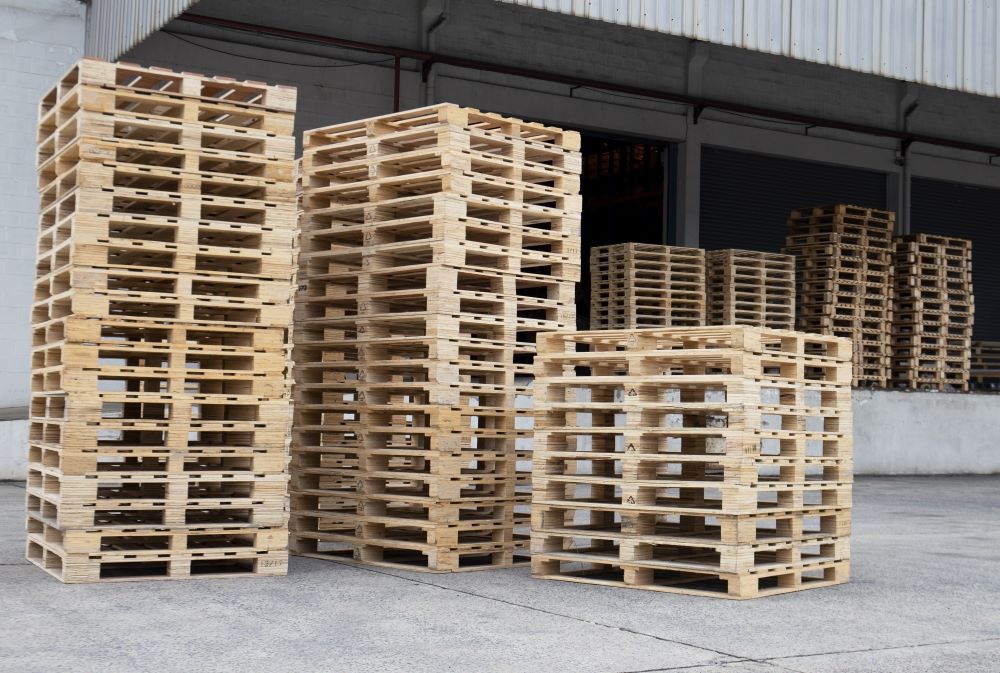
What is a pallet
The Large explanatory dictionary of Russian nouns defines the word pallet as “a large container made of metal or wood, wide and flat, of various shapes, usually having low walls; intended for the transportation of goods”. And logisticians are in complete agreement with this definition of a pallet as a functional basis for moving goods. When it comes to empty containers, trucking companies say that a certain number of pallets have been purchased.
What is a pallet
Logisticians may use the term full pallet, empty pallet (or full-empty pallet). Obviously, the first case refers to a pallet loaded with goods, and the second case refers to an empty container. In other words, a pallet is a cargo unit, a container loaded with goods. The difference in concepts is quite noticeable, especially if we consider the situation when the weight of a pallet is reported – it is clear that we are not talking about an empty container.
What is the difference between a euro pallet and a regular pallet
The question often arises, what is the difference between a euro pallet and a regular pallet – manufactured according to GOST. Obviously, the parameters and manufacturing technology of the former is regulated by the document adopted in Europe (UIC 435-2), and the latter – the Russian GOST 33757-2016. If we make a comparison, it will be clearly seen that the European standard establishes more stringent regulations and requirements for both the quality of lumber and the technology of manufacturing containers. In addition, there are differences in the size tables.
Due to the choice of more durable wood with low density, europallets of the same size as conventional pallets weigh less – up to 25 kg (vs. 40 kg). Also, by using wider boards made of high-strength raw materials for the top deck, Europallets can support more weight. Their nominal load capacity for the most popular size (1200×800 mm) is 1.5 tons (against 1 ton for the corresponding conventional size).
The European standard has stricter requirements for fasteners (in particular, the type of nails), which makes the pallets stiffer. Also, lumber for Europallets must be treated using special technologies, after which they become more resistant to chips, scratches and other damage. This approach to production ensures a longer service life of containers compared to conventional pallets and their reliability.
Ruspallet offers to buy pallets for various purposes wholesale and retail. We are one of the leading suppliers of europallets in Russia, all our products are certified. We can guarantee an individual approach to each client and favorable prices.